
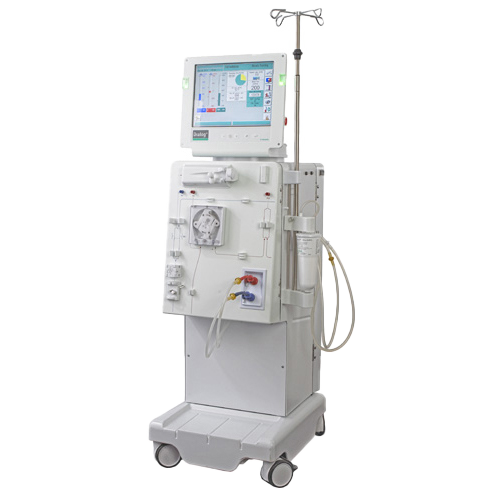
The Process
- Vascular
Access:
A minor surgery creates a vascular access site, usually in the arm, to provide a way for blood to enter and exit the body during treatment.
- Blood
Circulation:
Blood travels through tubes to the dialyzer, a machine with a filter called a dialyzer.
- Filtering:
Inside the dialyzer, the blood is separated from a special cleansing fluid called dialysate by a semi-permeable membrane.
- Waste
Removal:
Waste products and excess fluid move from the blood across the membrane into the dialysate.
- Return
of Blood:
The cleaned blood is then returned to the body through a
separate set of tubes.
Why In-Hospital Hemodialysis is Used
Complications: Patients may require hospital hemodialysis due to complications of chronic kidney disease or dialysis access issues that cannot be managed at a clinic or home.
Types of In-Hospital Care
Acute Intermittent Hemodialysis: Provided in the hospital ward, this is a common form of treatment for acute renal failure.
Continuous Renal Replacement Therapy (CRRT): This is a
slower, more continuous form of dialysis used for patients in the Intensive
Care Unit (ICU) who are critically ill.